
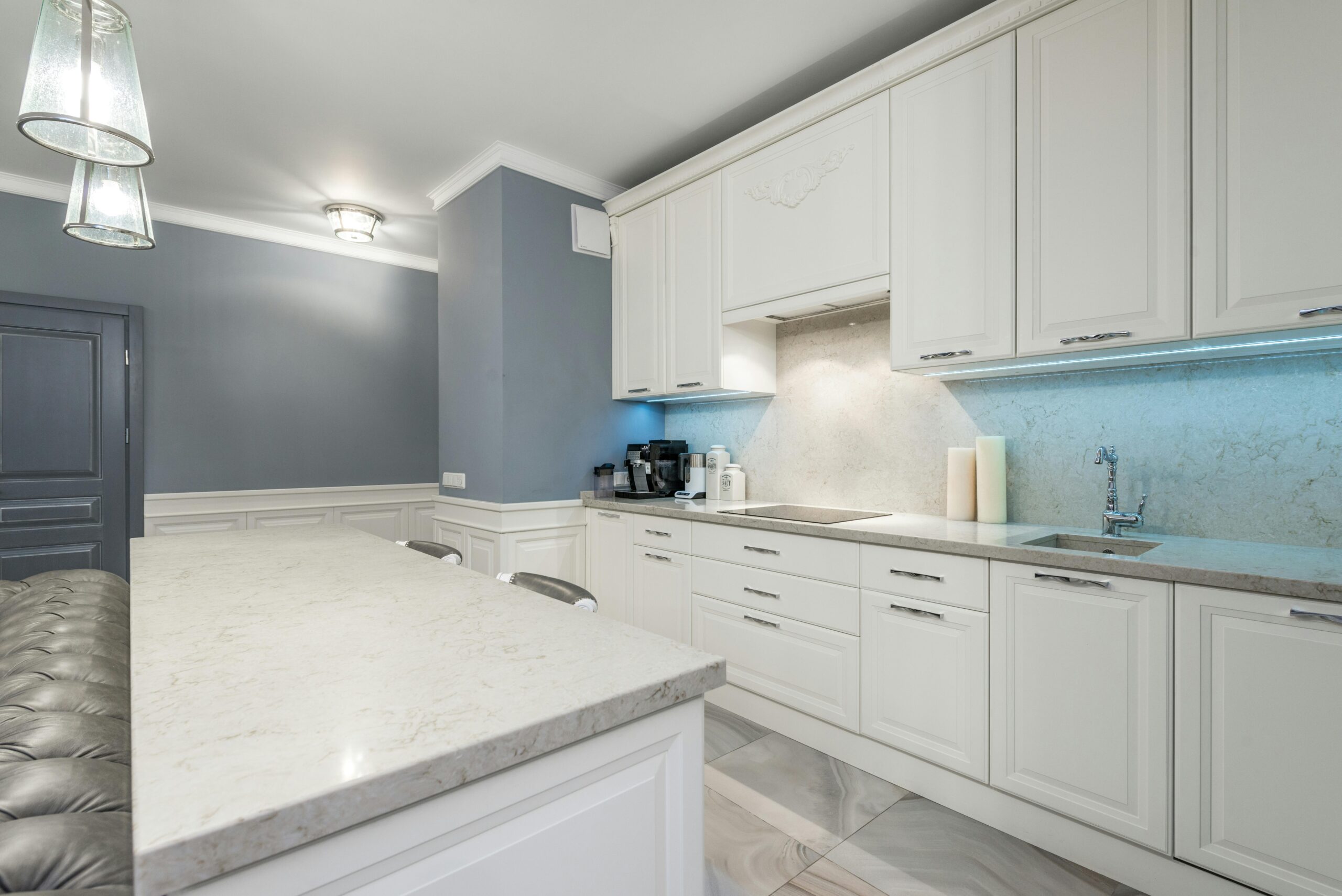
When planning a kitchen remodel, countertops play a major role in both design and daily use. A quartz kitchen countertop is a popular option for modern kitchens. Still, every material comes with its own advantages and limitations. Below, we’ll break down the key pros and cons to help you decide if quartz fits your space.
Appearance and Design
Quartz countertops are engineered using natural quartz combined with resins and pigments. This process makes it easier to achieve a uniform look across different sections of the countertop.
Pros
- Patterns provide a consistent look across large surfaces.
- A wide range of colors and finishes supports a variety of kitchen styles.
Cons
- Quartz countertops lack the natural variation some homeowners prefer.
- Designs can feel too uniform or “manufactured.”
Durability and Heat Performance
Quartz holds up well in daily cooking and food prep, making it a dependable surface for busy homes. However, it’s still important to be mindful of high heat.
Pros
- Quartz countertops resist scratches and helps prevent stains from common spills.
- They can handle heat from warm pots and dishes.
Cons
- Edges and cutout areas may chip or get damaged from impact.
- High or sudden heat may cause discoloration or leave permanent marks on the surface.
Maintenance and Cleaning Requirements
Quartz is known for its low maintenance. Daily cleaning is simple and does not need specialized products or intensive upkeep.
Pros
- Quartz countertops do not require sealing as part of routine care.
- They can be cleaned easily using mild soap and water.
Cons
- Harsh or abrasive cleaners may affect the surface finish.
- Residue buildup can occur if not cleaned regularly.
Installation and Structural Factors
Proper installation helps ensure a secure fit and long-term performance. Since each surface is custom-fit to your kitchen layout, professional installation is typically required.
Pros
- Custom fabrication allows a precise fit across different kitchen layouts.
- Quartz countertops work well with modern designs and integrated features.
Cons
- The material is heavy and usually requires professional installation.
- Cabinets may need added support to handle the weight.
Cost and Long-Term Value
Price is often considered alongside long-term performance when choosing a countertop. This provides a clearer picture of overall value.
Pros
- Quartz is durable and can maintain its appearance over time.
- It is a popular option that may appeal to future buyers.
Cons
- The upfront cost is generally higher than some alternatives.
- Pricing can vary based on design, brand, and installation needs.
Talk to a Local Flooring and Countertop Expert
Choosing the right countertop depends on your design preferences, daily habits, and budget. If you’re considering a quartz kitchen countertop, contact Caruso’s Floors in Spokane, Washington to explore available styles and find the right fit for your kitchen.